




RAY, HPP star
What is
hypophosphatasia (HPP)?
Hypophosphatasia (hypo-fahs-fuh-TAY-shuh), or HPP, is a rare, inherited disease that affects the bones and other parts of the body.

HPP AND ALP
People with HPP have a mutation in the ALPL gene, which may cause missing or not enough alkaline phosphatase (ALP) enzyme. This means that people with HPP have ALP levels lower than the healthy normal for their age and sex. When this is the case, the body has trouble making healthy bones. Low ALP levels can make bones soft, weak, and deformed, and cause other symptoms of HPP.
Learn more about ALP and how STRENSIQ® (asfotase alfa) works to replace it.

All people have the ALPL gene, which makes an enzyme called ALP. The body needs ALP to form healthy bones.
HPP SIGNS AND SYMPTOMS
HPP looks different for every person. The condition can affect people of all ages and may vary in terms of severity of signs and symptoms—even in the same family. New symptoms can appear at any age. Symptoms can continue long-term, and they can worsen over time.
HPP can affect many different parts of the body. Early tooth loss, frequent bone injuries, and muscle weakness and pain are some examples of impact.
Use the skeletal graphic to explore more impacts of HPP.
Not an exhaustive list
SKULL AND BRAIN
TEETH
RIBS AND LUNGS
KIDNEYS
MUSCLES AND JOINTS
BONES
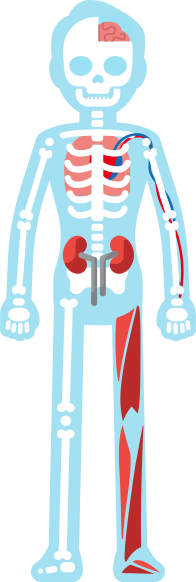
Skull and brain
- Abnormally shaped head
- Seizures in infants

Infants
- Short limbs, abnormal chest or head shape, and soft skull bones
- Life-threatening complications, such as pressure on the brain, seizures, and difficulty breathing
- When left untreated, chances of survival are low for infants with HPP

Children and adolescents
- Slow or stunted growth
- Difficulty doing things their friends can do, from basic activities like walking, bending, or climbing stairs to high-energy activities like riding a bike or skating
- Muscle pain, weakness, and fatigue that peers their age don’t experience

Adults
- Continued difficulties that may have been experienced during childhood and adolescent activities
- Daily challenges, such as trouble walking, running, standing from a sitting position, and picking things up
- Severe muscle, joint, or bone pain that could limit activity

It is common for people of all ages with HPP to need some form of an assistive device to help them get around.
How A Doctor May Diagnose HPP
A person who shows signs and symptoms of HPP should talk to
their doctor about taking a blood test to examine their ALP level. After a thorough exam and
reviewing
medical history, if blood test results reveal their ALP level is low for someone of their age
and sex, a
doctor may diagnose them with HPP.
HPP is often misdiagnosed. ALP can be low because
of HPP, but
it can also be low for other reasons. Because HPP is rare, not every doctor has the same amount
of
experience with the disease. Also, some of the symptoms of HPP can be symptoms for other, more
common
conditions.
It’s The combination of one or more HPP symptoms with persistently low ALP
levels that have no other explanation that can lead your doctor to diagnose HPP

Signs and symptoms on physical
examination,
x-rays, or in patient history


Persistently low ALP
enzyme
levels*
Signs and symptoms on physical examination,
x-rays, or in patient history
Persistently low ALP
enzyme levels*
Check with your doctor for the appropriate age- and sex-adjusted reference range.

The power of an
hpp
diagnosis
After all those years, I finally
received my diagnosis,
and I felt
vindicated and surprisingly happy.
I knew there was a
treatment, and I was excited to try it.”
Sheila, HPP STAR
Conditions that can look like HPP
Below are other diseases that may be more common
and have shared symptoms with HPP.
Diseases in bold often have overlapping symptoms
and therefore can be common misdiagnoses.
Weak bones
Rickets (nutritional rickets and X-linked
hypophosphatemic rickets)
Osteopenia/osteoporosis
Osteogenesis imperfecta
Osteomalacia
Osteopenia/osteoporosis
Osteogenesis imperfecta
Osteomalacia
Chronic pain and joint problems
Osteoarthritis/arthritis
Rheumatoid arthritis
Leukemia or bone cancer
Fibromyalgia
Pseudogout
Rheumatoid arthritis
Leukemia or bone cancer
Fibromyalgia
Pseudogout

Tooth loss
Gum disease
Dentinogenesis imperfecta
Dentinogenesis imperfecta

WHAT WAS YOUR HPP DIAGNOSIS JOURNEY LIKE?
SPECIALISTS WHO CAN HELP WITH HPP
When it comes to rare diseases, specialists are important. Specialists are trained to treat rare diseases and may better understand ways to manage symptoms.
If you believe you or someone you care for has HPP but has not been diagnosed, look for a specialist who may be familiar with HPP. Some specialists who may be able to help include:

Geneticists
Study the role that genes play in disease and health

Orthopedists
Study the bones, joints, ligaments, tendons, and muscles

endocrinologists
Study hormone imbalances

Rheumatologists
Study pain and disorders of the joints, muscles, tendons, bones, and other connective tissues

ONESOURCETM HPP PATIENT SUPPORT
Sign up for OneSource to find tools, resources, and personalized support to help you manage your treatment journey at: 1-888-765-4747.
ONESOURCE ONLINE EXPERIENCE

AT ONESOURCE, WE ARE BY YOUR SIDE THROUGHOUT YOUR JOURNEY, FROM LEARNING ABOUT YOUR CONDITION TO HELPING YOU ACCESS THE THERAPY YOU'VE BEEN PRESCRIBED. PATIENTS' NEEDS ARE OUR TOP PRIORITY.
–Deana,
ONESOURCE CASE MANAGER
IMPORTANT SAFETY INFORMATION
What is the most important information I should know about STRENSIQ® (asfotase alfa)?
STRENSIQ may cause serious side effects, including severe allergic (hypersensitivity) reactions. Allergic reactions are common with STRENSIQ treatment and can be severe and life-threatening. Severe allergic reactions have happened in some people within minutes after receiving STRENSIQ and more than 1 year after starting treatment with STRENSIQ. Stop using STRENSIQ and go to the nearest hospital emergency room right away if you or your loved one get any of the following signs and symptoms of a serious allergic reaction:
- difficulty breathing
- choking sensation
- swelling of your eyes, lips, or tongue
- dizziness
- nausea or vomiting
- fever
- headache
- sweating
- feeling irritable
- chills
- skin redness
- skin rash or hives
-
itching or numbness of the
tongue, lips, cheeks, or gums
What are the other possible side effects of STRENSIQ?
STRENSIQ may cause other serious side effects, including:
- skin thickening or pits at the injection site (lipodystrophy). Lipodystrophy is common and has happened after several months in people treated with STRENSIQ.
- calcium build-up in the eyes and kidneys. People with HPP are at increased risk for developing calcium build-up in the body. Calcium build-up in the eyes and kidneys has happened and is a common side effect of STRENSIQ. Calcium build-up in the eyes and kidneys may also happen in people with HPP who are not treated with STRENSIQ. Your healthcare provider should check your eyes and kidneys before and during treatment with STRENSIQ.
- immune-related effects. You may develop antibodies during treatment that may decrease how well STRENSIQ works. Tell your healthcare provider right away if you get worsening symptoms of HPP including: difficulty breathing, difficulty walking, feeling tired, bone pain, stiff joints, or loss of appetite.
The most common side effects of STRENSIQ include local skin injection site reactions such as skin redness, bruising, color change, pain, itching, hardening of the skin (induration), swelling, and bumps. These are not all the possible side effects of STRENSIQ. For more information, ask your healthcare provider or pharmacist. Call your healthcare provider for medical advice about side effects.
You will begin receiving STRENSIQ under the supervision of a healthcare provider. Tell your healthcare provider about all your medical conditions, including if
you:
- have had an allergic reaction to STRENSIQ.
- are pregnant or plan to become pregnant. It is not known if STRENSIQ will harm your unborn baby.
- are breastfeeding or plan to breastfeed. It is not known if STRENSIQ passes into your breast milk. Talk to your healthcare provider about the best way to feed your baby if you use STRENSIQ.
Tell your healthcare provider about all the
medicines you
take,
including
prescription and over-the-counter medicines,
vitamins, and herbal
supplements.
There is a registry for people who use STRENSIQ. The purpose of this registry is to collect information about HPP and about what happens when you use STRENSIQ for a long time. For more information about this registry, talk with your healthcare provider or go to www.hppregistry.com
To report SUSPECTED SIDE EFFECTS, contact Alexion
Pharmaceuticals, Inc. at
1-844-259-6783 or FDA at
1-800-FDA-1088
or www.fda.gov/
medwatch.
INDICATION
What is STRENSIQ?
STRENSIQ is a prescription medicine
used to
treat people
with perinatal, infantile, and juvenile onset
hypophosphatasia (HPP).
Please see the full Prescribing Information and Patient Information, including Boxed WARNING regarding severe allergic (hypersensitivity) reaction.
IMPORTANT SAFETY INFORMATION
What is the most important information I should know about STRENSIQ® (asfotase alfa)?
STRENSIQ may cause serious side effects, including severe allergic (hypersensitivity) reactions. Allergic reactions are common with STRENSIQ treatment and can be severe and life-threatening. Severe allergic reactions have happened in some people within minutes after receiving STRENSIQ and more than 1 year after starting treatment with STRENSIQ. Stop using STRENSIQ and go to the nearest hospital emergency room right away if you or your loved one get any of the following signs and symptoms of a serious allergic reaction:
- difficulty breathing
- choking sensation
- swelling of your eyes, lips, or tongue
- dizziness
- nausea or vomiting
- fever
- headache
- sweating
- feeling irritable
- chills
- skin redness
- skin rash or hives
-
itching or numbness of the
tongue, lips, cheeks, or gums
What are the other possible side effects of STRENSIQ?
STRENSIQ may cause other serious side effects, including:
- skin thickening or pits at the injection site (lipodystrophy). Lipodystrophy is common and has happened after several months in people treated with STRENSIQ.
- calcium build-up in the eyes and kidneys. People with HPP are at increased risk for developing calcium build-up in the body. Calcium build-up in the eyes and kidneys has happened and is a common side effect of STRENSIQ. Calcium build-up in the eyes and kidneys may also happen in people with HPP who are not treated with STRENSIQ. Your healthcare provider should check your eyes and kidneys before and during treatment with STRENSIQ.
- immune-related effects. You may develop antibodies during treatment that may decrease how well STRENSIQ works. Tell your healthcare provider right away if you get worsening symptoms of HPP including: difficulty breathing, difficulty walking, feeling tired, bone pain, stiff joints, or loss of appetite.
The most common side effects of STRENSIQ include local skin injection site reactions such as skin redness, bruising, color change, pain, itching, hardening of the skin (induration), swelling, and bumps. These are not all the possible side effects of STRENSIQ. For more information, ask your healthcare provider or pharmacist. Call your healthcare provider for medical advice about side effects.
You will begin receiving STRENSIQ under the supervision of a healthcare provider. Tell your healthcare provider about all your medical conditions, including if
you:
- have had an allergic reaction to STRENSIQ.
- are pregnant or plan to become pregnant. It is not known if STRENSIQ will harm your unborn baby.
- are breastfeeding or plan to breastfeed. It is not known if STRENSIQ passes into your breast milk. Talk to your healthcare provider about the best way to feed your baby if you use STRENSIQ.
Tell your healthcare provider about all the
medicines you
take,
including
prescription and over-the-counter medicines,
vitamins, and herbal
supplements.
There is a registry for people who use STRENSIQ. The purpose of this registry is to collect information about HPP and about what happens when you use STRENSIQ for a long time. For more information about this registry, talk with your healthcare provider or go to www.hppregistry.com
To report SUSPECTED SIDE EFFECTS, contact Alexion
Pharmaceuticals, Inc. at
1-844-259-6783 or FDA at
1-800-FDA-1088
or www.fda.gov/
medwatch.
INDICATION
What is STRENSIQ?
STRENSIQ is a prescription medicine
used to
treat people
with perinatal, infantile, and juvenile onset
hypophosphatasia (HPP).
Please see the full Prescribing Information and Patient Information, including Boxed WARNING regarding severe allergic (hypersensitivity) reaction.